Project

Skin Hydration Sensor

Soft, wireless thermal sensor for rapid, noninvasive dermatological hydration measurements.
Soft wireless skin hydration sensor prototype
Figure: Soft wireless skin hydration sensor based on a thermal measurement method.

The paper Wireless, Soft Sensors of Skin Hydration with Designs Optimized for Rapid, Accurate Diagnostics of Dermatological Health develops a soft, skin-interfaced wireless sensor that measures hydration through a thermal method rather than conventional impedance probes. The work focuses on making the measurement faster, more sensitive, and more repeatable for clinical and home settings.

Paper takeaways

  • Thermal physics models guide the electronics layout and skin-sensor interface design.
  • Thin, narrow interconnects and simplified interfaces improve sensitivity by 135% over the previous platform.
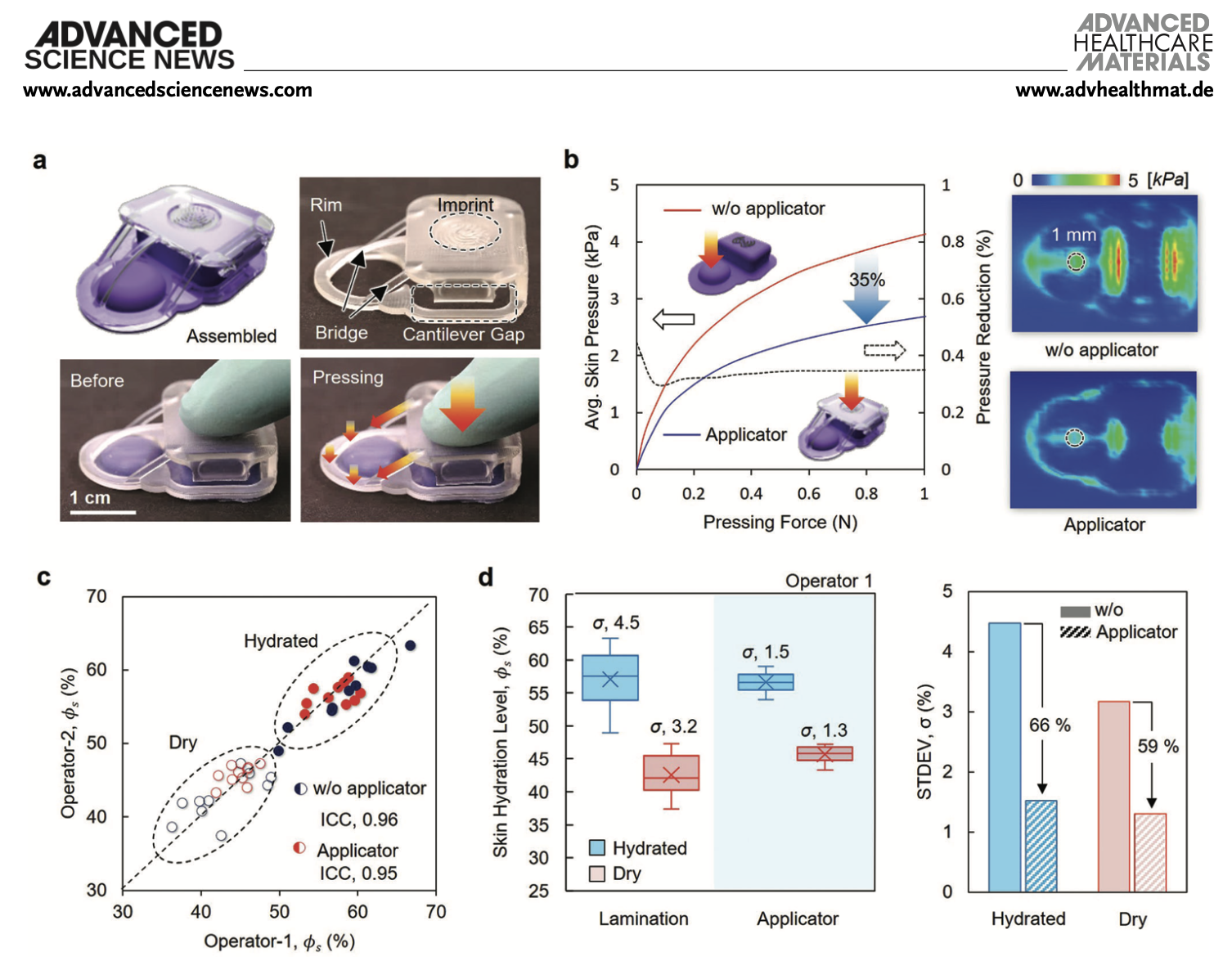
  • Protocol changes and a skeletal applicator reduce occlusion/pressure variability and improve repeatability by 36%.

Results that matter

  • The optimized sensor is designed for rapid spot measurements rather than continuous sweat-loss or TEWL tracking.
  • Clinical studies across more than 200 dermatology patients demonstrate practical use on healthy and diseased skin sites.
  • The device is positioned as a soft wireless alternative to hand-held clinical hydration probes.