Bioresorbable heart strain sensor concept
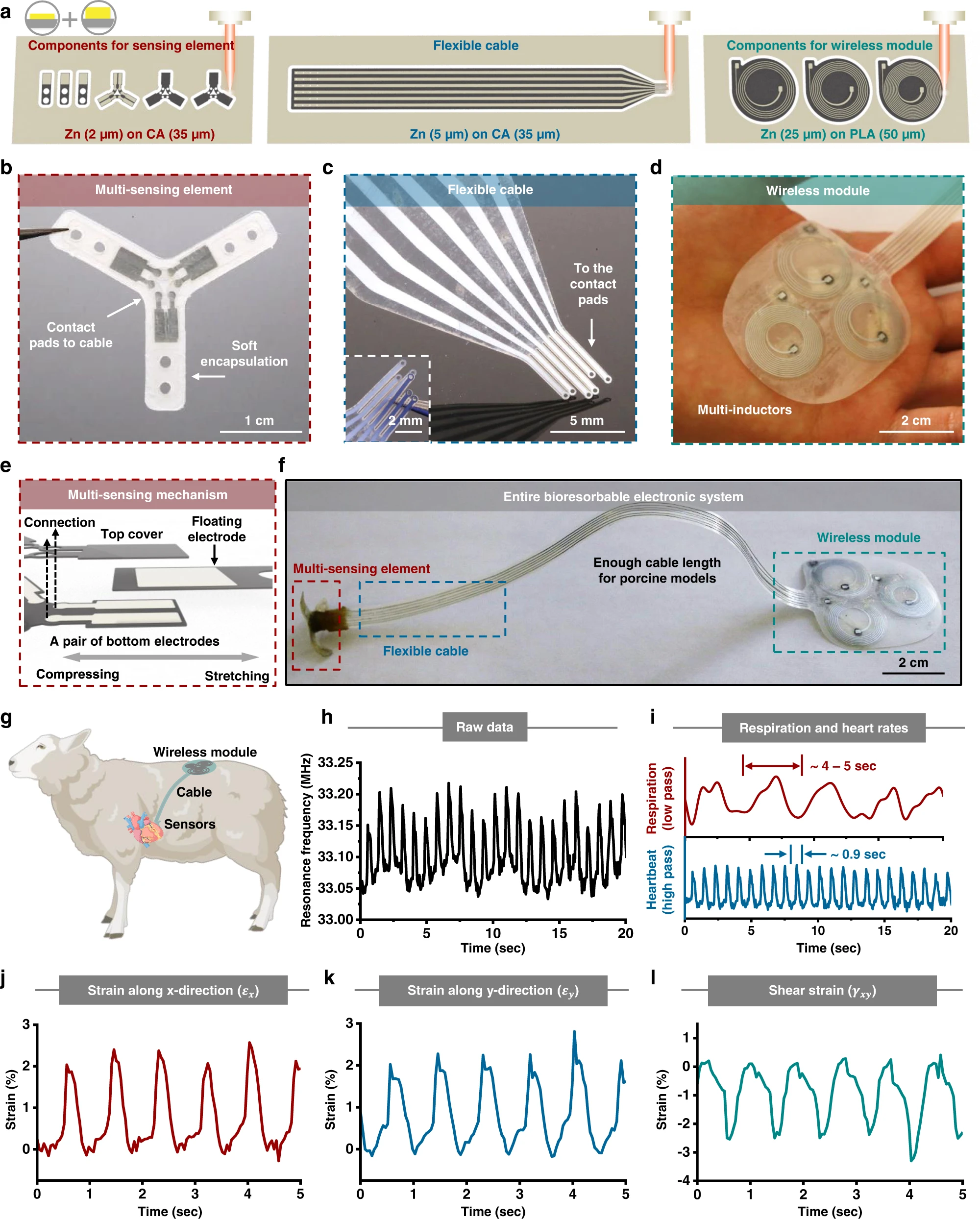
Figure: Bioresorbable cardiac strain-sensing concept based on multilayer transient electronics.

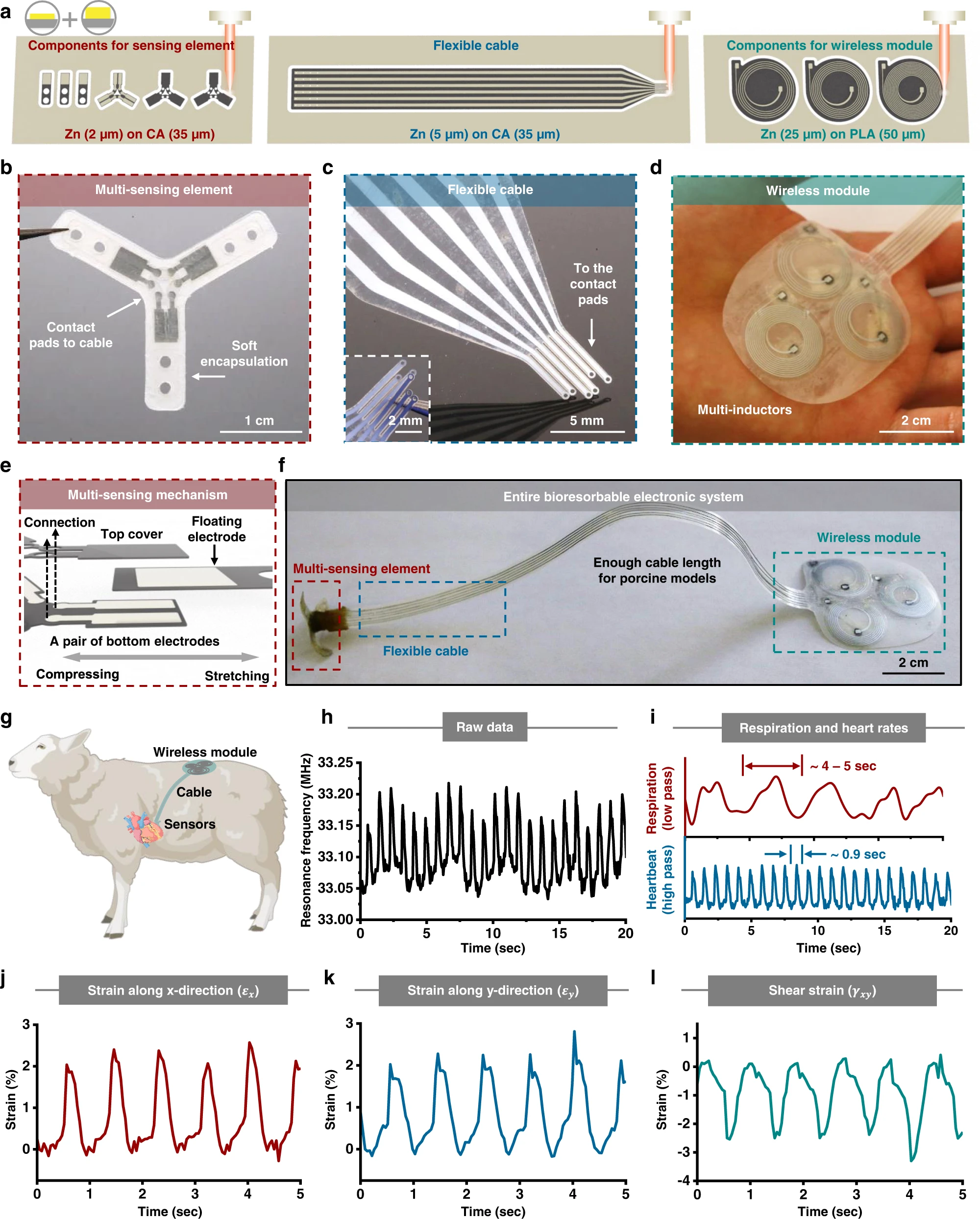
The Nature Communications paper High-Speed, Scanned Laser Structuring of Multi-Layered ECO/Bioresorbable Materials for Advanced Electronic Systems demonstrates a dry, scanned laser ablation process for multilayer eco/bioresorbable electronics. One system-level demonstration is a wireless strain-sensing device for the epicardial surface, evaluated in ex vivo porcine and in vivo ovine cardiac models.
Laser-structured eco/bioresorbable stack from the paper
Figure: Laser-structured multilayer bioresorbable stack and wireless cardiac strain system from the Nature Communications paper.

Paper takeaways

  • Picosecond laser ablation patterns bioresorbable substrates, conductors, dielectrics, and encapsulants without wet etching.
  • The Y-shaped capacitive sensing element is mechanically compliant with cardiac tissue and minimizes bending artifacts.
  • A flexible cable connects the sensing element to a wireless module positioned subcutaneously in the in vivo cardiac study.

Results that matter

  • Device characterization shows high strain sensitivity, negligible bending sensitivity, and minimal mechanical loading on tissue.
  • Ex vivo and in vivo experiments recover frequency signals that support respiration, heart-rate, and principal/shear strain analysis.
  • The cardiac system is one example in a broader manufacturing platform for eco/bioresorbable electronics across organ systems.