Bioresorbable heart sensor
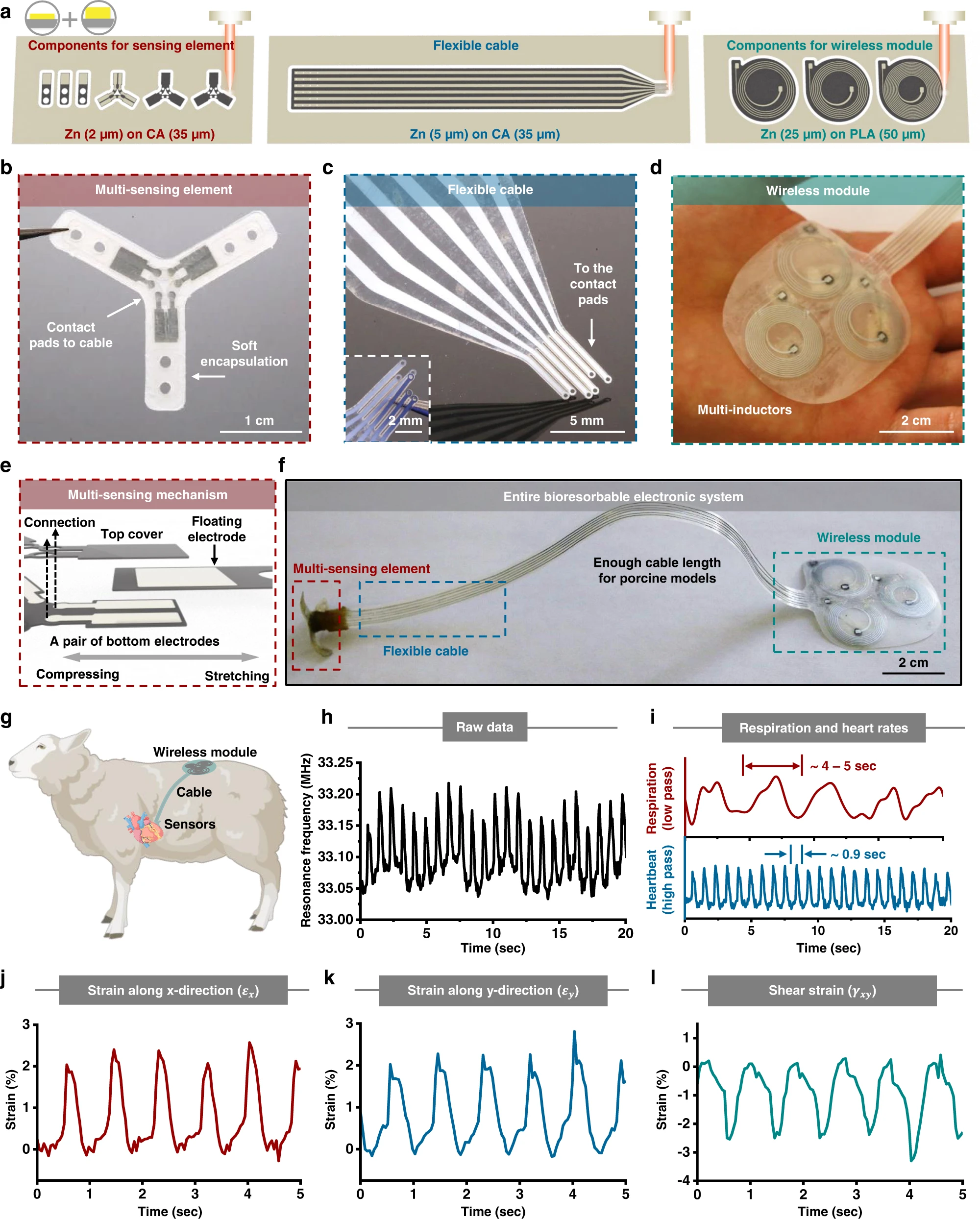
Figure: Bioresorbable multilayer strain sensor concept for temporary cardiac monitoring.

Grounded in the Nature Communications paper High-Speed, Scanned Laser Structuring of Multi-Layered ECO/Bioresorbable Materials for Advanced Electronic Systems (2023), this work builds transient cardiac strain sensors that operate during recovery and then safely resorb.
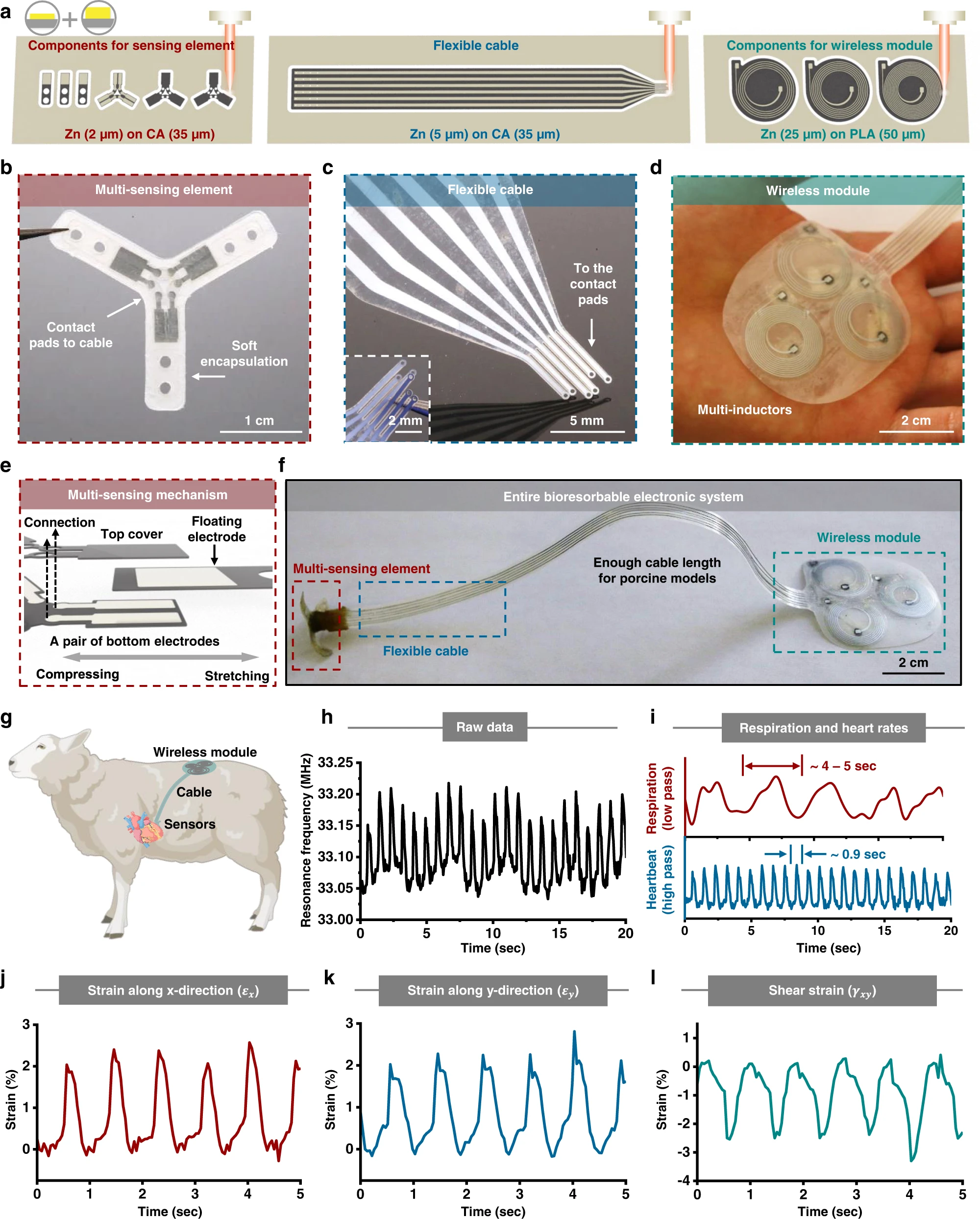
Laser-structured eco/bioresorbable stack from the paper
Figure: Laser-structured multilayer bioresorbable stack and device cross-sections enabling conformal, transient sensors (from the Nature Communications paper).

Paper takeaways

  • High-speed laser micromachining patterns conductive and dielectric bioresorbable layers without wet chemistry.
  • Stacked architectures yield thin, flexible sensors that conform to the epicardium while minimizing stress shielding.
  • Devices are designed to function during the critical healing window and dissolve afterward, avoiding extraction surgery.

Results that matter

  • Mechanical compliance and finite element analysis confirm safe coupling to beating myocardium.
  • In-vitro dissolution profiles show predictable resorption timelines for conductors and encapsulants.
  • Wireless readout pathways integrate with the transient substrate, enabling clean strain signals during acute testing.